| “ | I come from a small town, in a tiny kingdom, in one of the poorest and most insignificant of the old worlds. | „ |
| ― Pinocchio to "Red Riding Hood," Fables #23 — "Our Second Amendment Issue: Chapter Four — March of the Wooden Soldiers" |
Toscane, also known as the Imperial Homeworld, is a world that is the Homelands version of Italy. It first appears in a brief flashback in Fables #4 — "Chapter Four: Remembrance Day."
Description
Toscane is home to several Italian Fables; the Adversary and the characters from The Adventures of Pinocchio.[2] The world is Italian in nature, which can be seen in the Roman architecture of the capital city.[4]
History
The rise of Geppetto
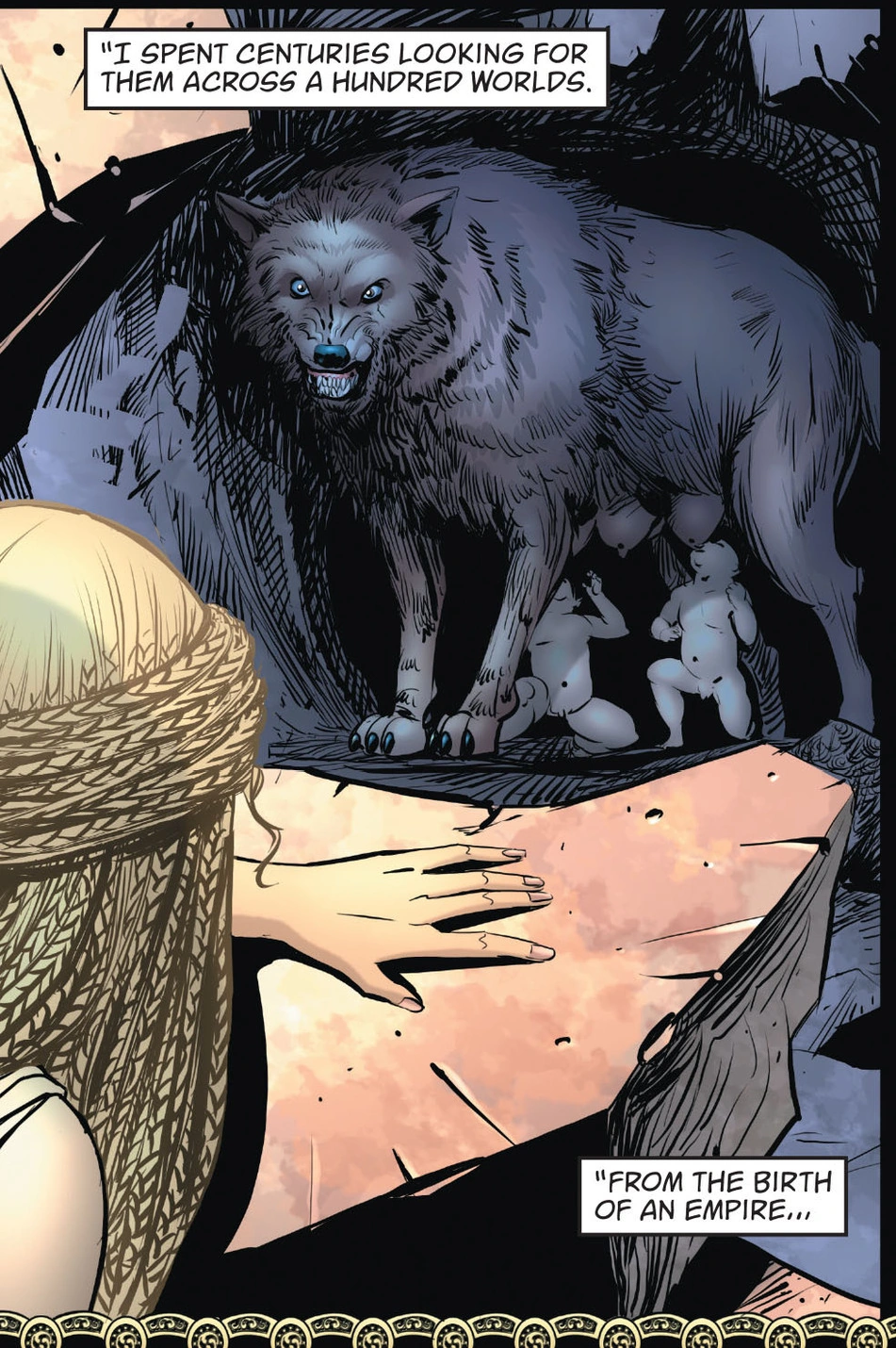

Rapunzel sees the infant Romulus and Remus
While searching for her lost children, Rapunzel found a she-wolf suckling the infant Romulus and Remus, and witnessed the birth of an empire.[5]
Geppetto, a woodcarver hailing from Toscane, gained recognition for his ability to carve living wooden puppets from the Sacred Grove, with the Blue Fairy transforming thousands of these into real flesh-and-blood (and fiercely loyal) servants and soldiers. Eventually, word got out of Geppetto's power, and town fathers from throughout the county of Calabri Anagni visited Geppetto. The count of Calabri Anagni had gone mad, falling under a sickness of corruption and plunging the lands into a dire situation. The town fathers requested that Geppetto replace the count with one of his puppets that would be his fetch. Geppetto agreed to their plan and after enlisting the help of the Blue Fairy, turned the fetch of the count into a real man. Once the real count was eliminated, his fetch resumed his place without any suspicion being raised, ruling with perfect justice.[2]
Soon, seeing the good his puppets would do as rulers, Geppetto began to replace the dukes, counts, and even the king with his puppets. With the Blue Fairy's magic making them loyal to Geppetto, he soon became the de facto ruler of the land,[2] and Toscane became the first world that fell to the Adversary.[6]
As demand from the town fathers for new puppets increased, hunger continued to expand for their small empire, the Blue Fairy grew tired of assisting Geppetto in the dangerous game he played. Using his control over all the major noble powers he controlled, Geppetto enlisted the aid of their magicians to teach him magic. Once he understood how the Blue Fairy turned his puppets into real people, Geppetto captured her and hooked her up to a device that allowed him to harness her blue magic abilities in order to turn which ever puppets he wanted into real people.[2]
As Geppetto's power grew, replacing rulers with puppets became too slow, so he decided to turn to armed conquest instead. He created a giant warrior puppet: the Emperor, a figure which inspired martial law in the kingdoms and worlds that already belonged to him. Using the combined military might of the lands he had conquered, Geppetto began to attack other Fable worlds, one by one falling to his Empire's power,[7] with Toscane's Imperial City serving as the capital[8] of his new Empire.[7]
Fabletown fights back
Needing more wooden soldiers and aids crafted at an ever increasing and expanding pace, Geppetto employed junior and senior craThe Snow Queen ftsmen to help him carve more sons and daughters, personally overseeing each craftsman's progress so that his wooden offspring would always be to his liking,[7] not realizing that Frau Totenkinder, a witch living in exile in Fabletown in the mundane world, had infiltrated his workshop using her own magic and began to gather intelligence on his Empire.[9]
After one of Fabletown's residents, Boy Blue, enters the Homelands and systematically attacks the Empire in retaliation for the attack they committed on Fabletown, before finally entering the Imperial Homeworld to decapitate the Emperor and halt Geppetto's puppet's rule for a time, leading to him being brought to Geppetto's cabin in the Magic Grove for interrogation.[2] However, Blue is able to escape back to Fabletown thanks to the power of the Witching Cloak.[7]
One another one of Fabletown's residents, Bigby Wolf arrives in Toscane as retaliation for the strike on Fabletown by Geppetto's wooden soldiers and Blue Boy's capture, Bigby detonates explosives across the entire grove, destroying it completely, noting that it will take decades for it to grow back, thereby halting the Adversary's ability to make new wooden soldiers, and destroying Geppetto's entire arsenal of tools and magic.[8]
Preparations for war
Realizing the advantage Fabletown had momentarily gained against his forces, Geppetto decides that war against them is the only option for the future, rallying his closest allies and forces for a meeting on how they should proceed in their plans.[10]
Geppetto holds a conference with the Snow Queen, Hansel, the Nome King, and other important members of the Empire,[10] where the Snow Queen a carefully thought out plan for the invasion of the mundane world,[11] His son Pinocchio then gives a presentation of his own on why the Snow Queen's plan of attack on the mundane world is flawed and wouldn't work, citing that the residents of Fabletown would surely reveal themselves to the mundy population and work together in an effort to quickly squash the Empire's attempts at conquest. After hearing his son's presentation, Geppetto decides that the Snow Queen's plans be halted and the fate of Fabletown left to another day, agreeing that the Empire is not ready for a full-scale invasion of the mundane world quite yet.[12]
A few days later it is shown that Geppetto and the Snow Queen still plan to attack the mundane world. Geppetto considers what Pinocchio said at the war meeting and advises the Snow Queen that the exiled Fables must be dealt with subtlety to allow the Empire to easily deal with the mundy populations and armies.[12] During their conversation, Geppetto and the Snow Queen do not notice Frau Totenkinder spying on them using a wooden owl.[9]
Fall of the Empire
After Fabletown and a large group of Arabian Fables invade the Empire controlled Homelands, Geppetto and his remaining forces begin to resume a defensive counterattack around Imperial City.[13] Despite the Empire's best efforts, an unexpected attack from one of Fabletown's members, Briar Rose, leaves the Empire in complete disarray with the entire Imperial City, including their best human soldiers, being forced to sleep and the wooden soldiers consumed by enormous vines.[14] With his Empire destroyed,[15] Geppetto is transported by Boy Blue to Fabletown.[16]
Post-Empire
For years, the locals call Imperial City "The Sleeping City," before finally officially being renamed as such. Multiple people declare themselves the new Emperor, but most of them are overthrown. The city is eventually burned to the ground by goblin soldiers under the command of Prince Lindworm, so that the latest false Emperor, Jubilee Mirant, will never see his warlocks and bureaucrats woken.[17]
Points of interest
Gull Harbor
| Gull Harbor is mentioned in Fables #63 — "The Good Prince, Chapter Four: Home." After Geppetto's son Pinocchio runs away from home, he stays at an inn just outside Gull Harbor. | |
Imperial City
| Imperial City[4] is the capital city of the Empire,[8] which lies in the Calabri Anagni district.[4] After Briar Rose put the entire area to sleep, it was officially renamed The Sleeping City.[17] | 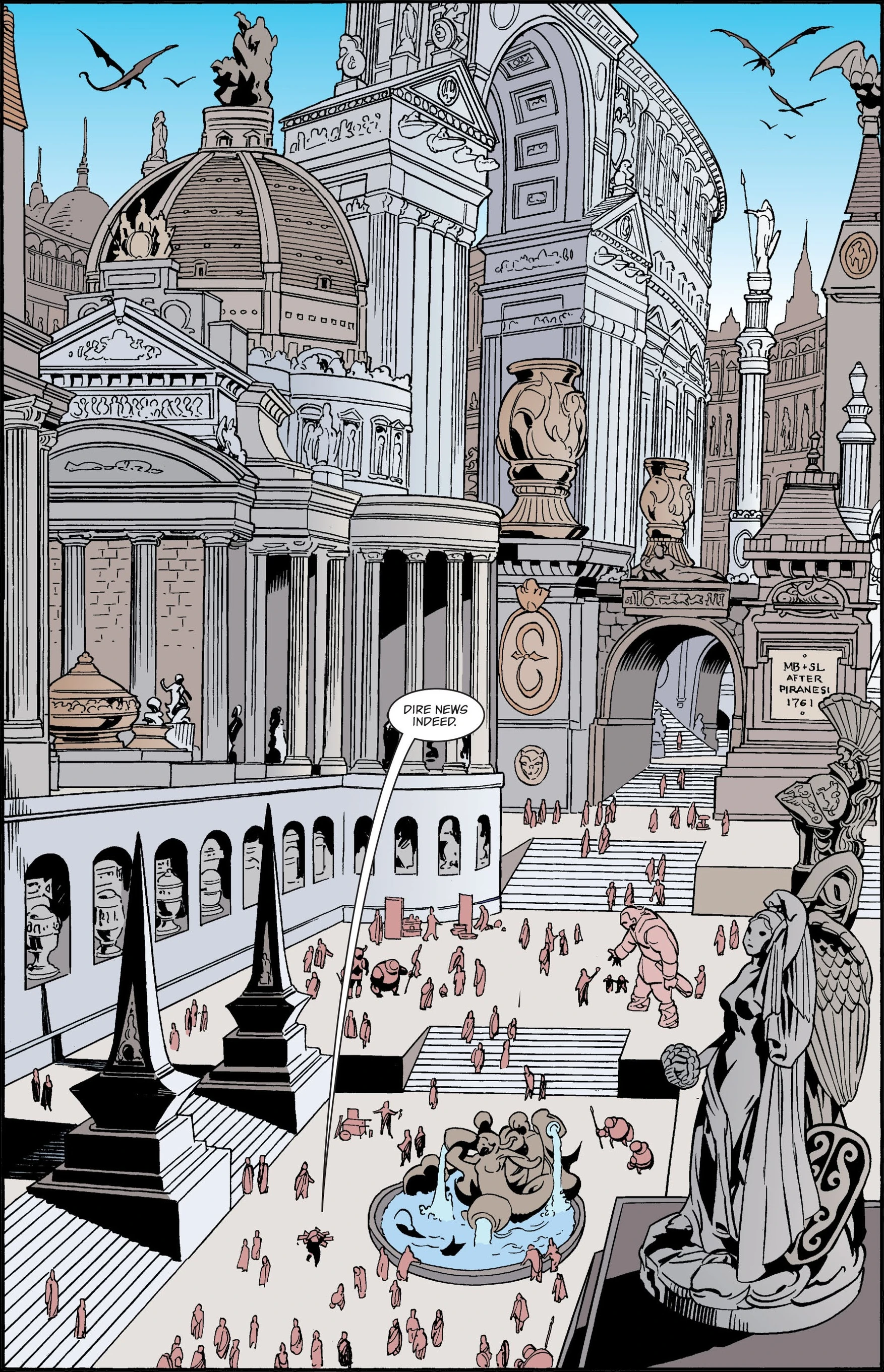 |

Rome
| Rome is mentioned in Jack of Fables #23 — "1883, Chapter Two: Moon of the Wolf" and Jack of Fables #24 — "1883, Chapter Three: The Showdown," and is the fabled version of the capital of Italy. Incitatus was a member of its senate.[18] Rome may or may not be the same location as Imperial City. | |
Sacred Grove
| Toscane was formerly the home to Geppetto's Sacred Grove,[2] now located in the Kingdom of Haven.[19] | 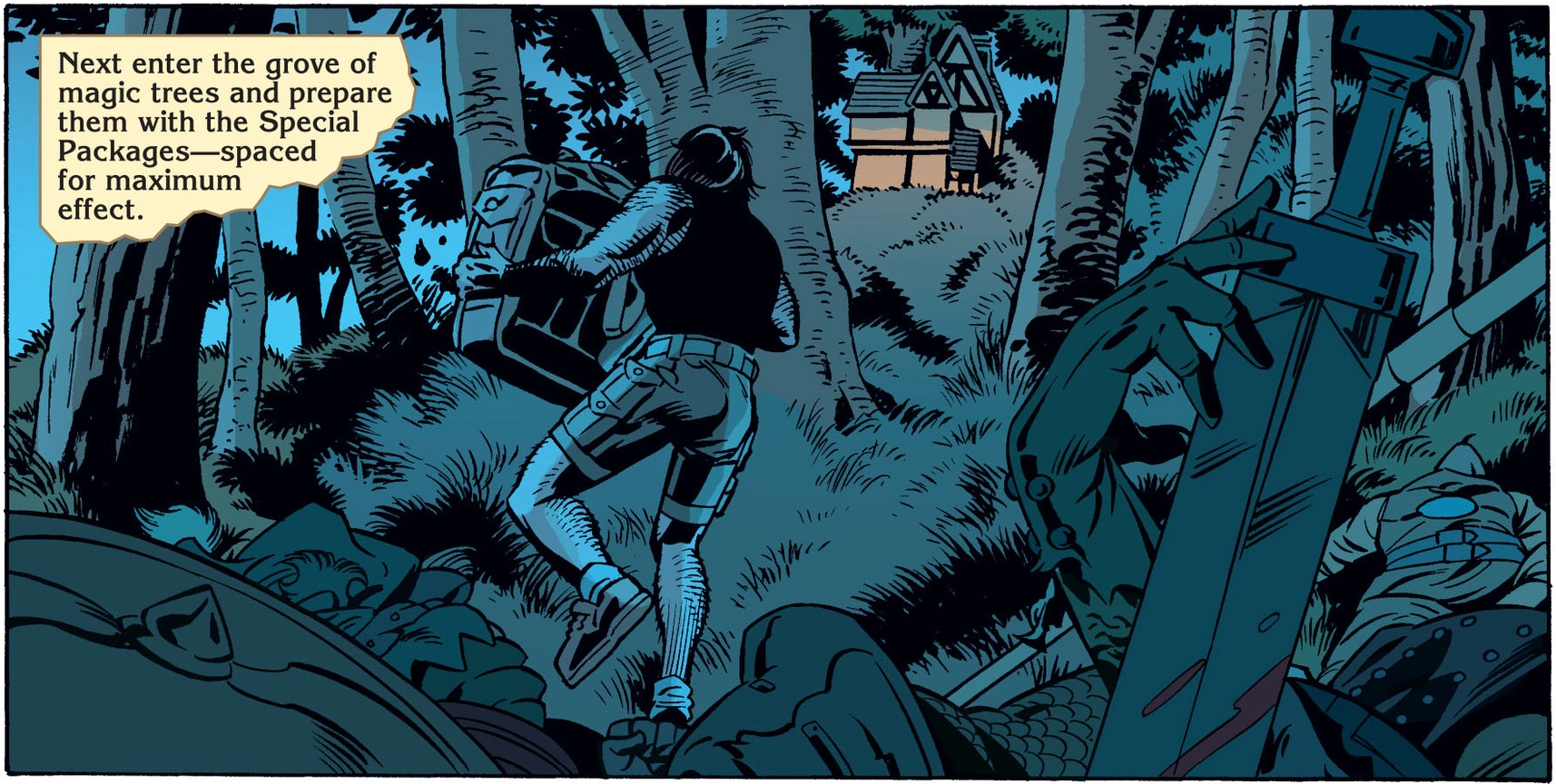 |

Residents
|
Appearances
|
Original source
Toscane is based on the setting from The Adventures of Pinocchio, which is set in an unspecified town in the Tuscan countryside.
Etymology
"La Toscane" is French for Tuscany,[30] a region in Central Italy.
"Calabri" is the plural form of the Italian word "Calabro,"[31] which means "Calabrian"[32] (someone from the Italian region Calabria), while Anagni is an ancient town in Central Italy.